Drains · Coronado
Floor drains and sump pumps: what a Coronado maintenance visit checked
A Coronado service record documents nine drains cleaned, pit debris removed and sump pumps tested. Learn what to ask about the drainage path and service results.
By the John Ciampoli Plumbing team
· 4 min read
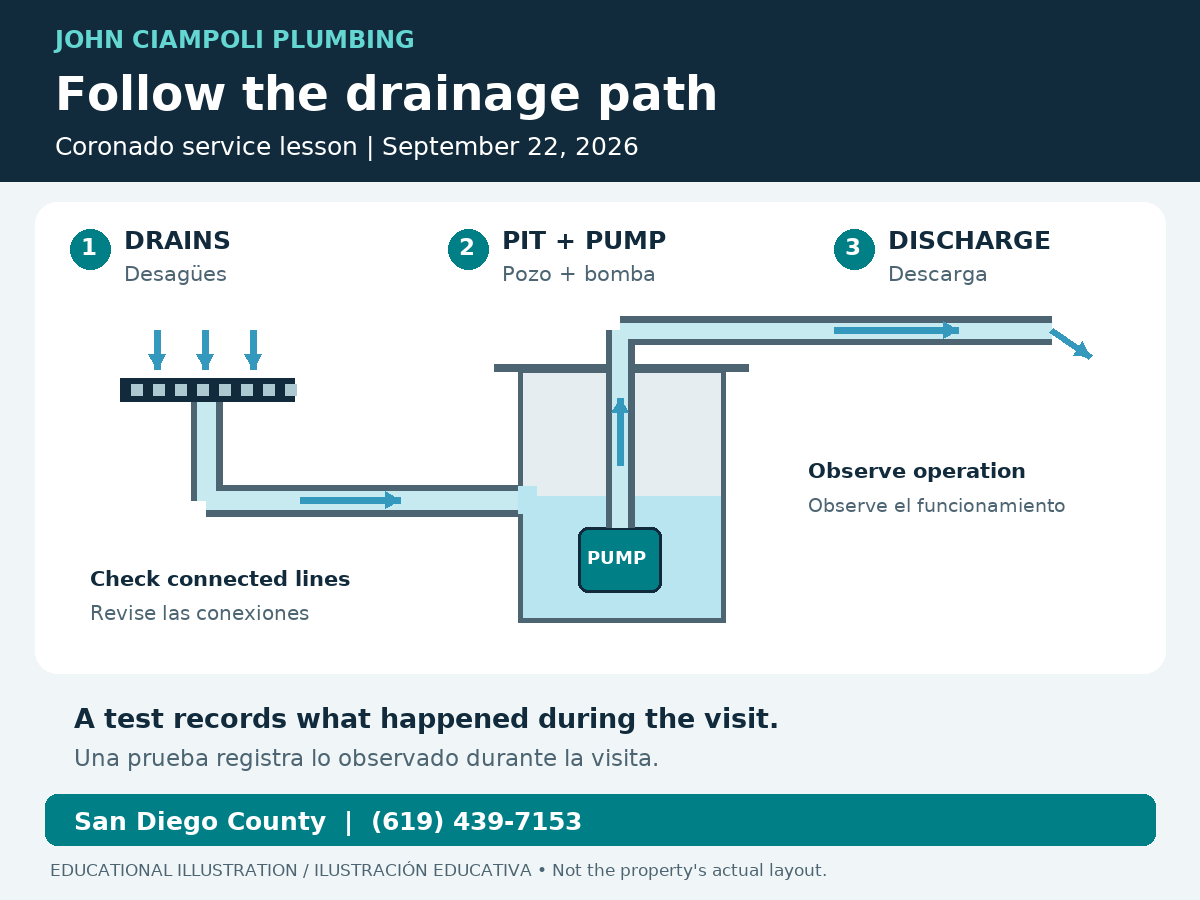
A clean-looking floor drain tells you little about the rest of a drainage system. At a Coronado property on September 22, John Ciampoli Plumbing serviced nine drains, removed leaves and debris from pit areas, and tested the sump pumps with water flowing through the system. The useful lesson is to document both the work and what the final test actually showed.
The service record followed the water beyond the opening
The notes describe below-grade pit areas connected to floor drains. Technicians cabled the accessible lines, including drains in rear and front areas, and removed accumulated debris from the pits. Two technician accounts and the service report document nine drains serviced during the visit.
That does not mean every property needs the same equipment or scope. Some drains follow a different route or serve a different purpose. When arranging maintenance, share any existing drainage plan and identify which openings, pits and pumps you know about. Ask the technician to confirm the connections rather than assuming every nearby drain goes to the same place.
What the water-flow test established
After the drain cleaning, the team introduced water and watched it move through the drains to the pit areas. The report records that the sump pumps activated and discharged during testing, and that no backups were observed at completion. It does not describe a pump replacement; the documented work was maintenance and testing of the existing system.
An operating pump and a clear drain are separate observations. A useful service report explains which parts were checked and what happened while water was flowing. This visit's result is evidence of operation at the time of service, not a measured storm-capacity certification or a guarantee that the property cannot flood.
What should a property manager prepare?
Make a list of the locations where water has pooled, the weather or fixture use at the time, and whether the same area has needed service before. Include previous reports, known pump information and any alarms you have already observed. Photographs from a dry, safe position can help explain the area without entering a pit or opening equipment.
Confirm who can authorize the work, who maintains the drainage system and how the technician will reach it. At a shared property, ask management about access, resident notices and any restrictions on work areas. Do not arrange work on public infrastructure as though it were a privately maintained drain.
Ask for a record you can use at the next visit
Ask the service report to identify the drains worked on, the debris removed, the parts repaired or replaced if any, and the observations made during final testing. Keep recommendations and work still awaiting approval separate from completed work. A note that a pump operated is not the same as a record that a new pump was installed.
For this Coronado visit, the records support drain cabling, pit cleanup and operational testing. They do not establish that a prior flood occurred, that every future blockage was prevented, or that a particular maintenance interval suits all properties. Discuss the next review around the actual equipment, debris exposure and service history.
Plan private-drain maintenance before difficult access or active flooding
The County of San Diego recommends preparing privately maintained drainage before rain, including removing accumulated debris and inspecting drainage paths. Its storm-preparedness page below also links to resources for determining maintenance responsibility. Those general preparation steps do not replace an assessment of your own system.
Do not reproduce the professional water-volume test as a homeowner procedure. Stay out of pits, flooded areas and wet electrical equipment; report active hazards and follow local emergency instructions. To discuss a private-drain or sump-pump maintenance visit, contact John Ciampoli Plumbing at (619) 439-7153 or dispatch@ciampoliplumbing.com. We serve all San Diego County. Share your ZIP code, the affected area and relevant service history; send exact addresses and access details privately.
Share this article