Water heaters · Lemon Grove
Tankless service valve stuck? A Lemon Grove maintenance lesson
A Lemon Grove tankless-water-heater visit needed a stuck isolation valve replaced before flushing. Learn what to report and how to plan maintenance access.
By the John Ciampoli Plumbing team
· 3 min read
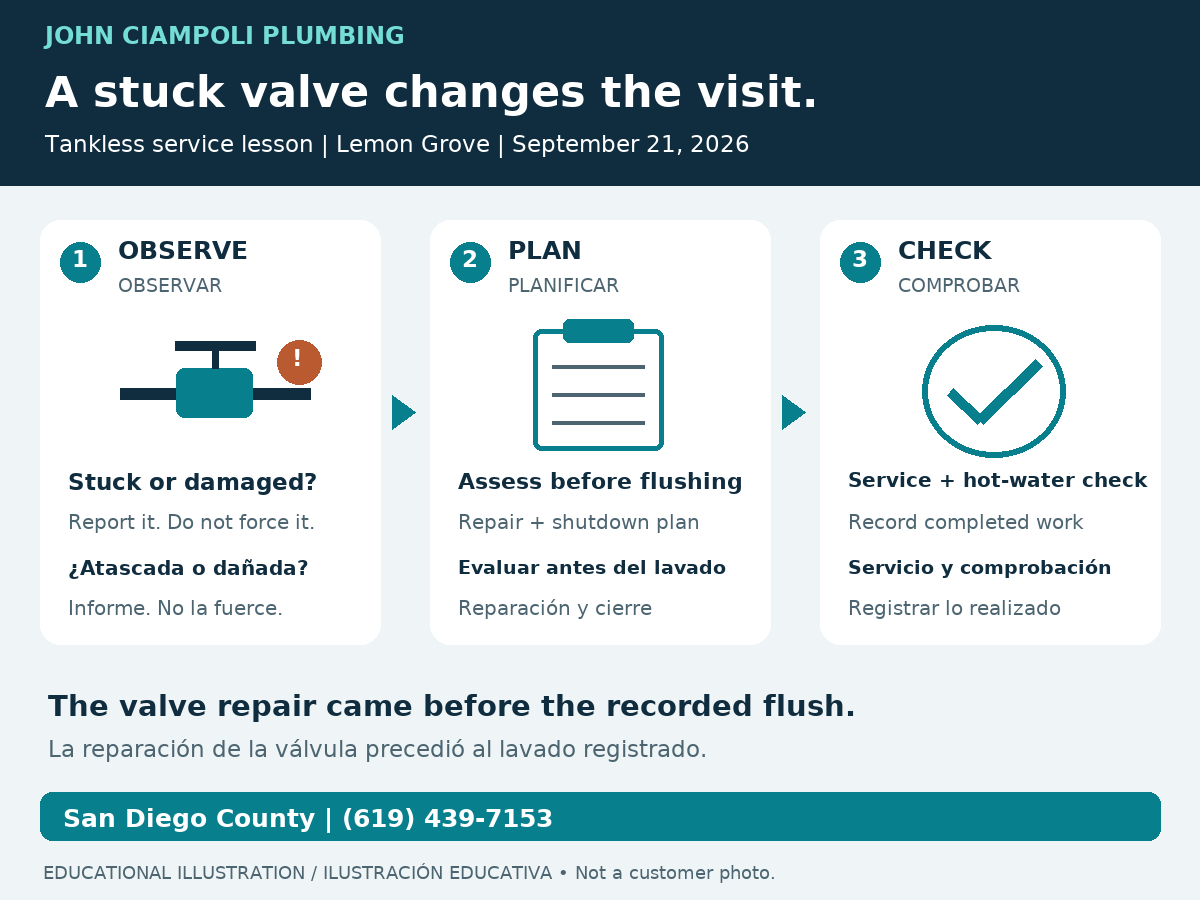
A tankless-water-heater maintenance visit can uncover a problem with the valves used to service the equipment. During a September 21 visit in Lemon Grove, John Ciampoli Plumbing found that the hot-side isolation valve was stuck. Its plastic handle broke during an attempted shutdown. The technician replaced the valve before proceeding with the recorded flushing work. For a homeowner, the practical lesson is to discuss access and valve condition along with the heater itself.
What the Lemon Grove visit actually included
The service record describes removal of the stuck hot-side isolation valve and installation of a replacement service valve with a union. The technician then set up a flushing loop, circulated descaling solution, rinsed the unit and restored water service. Hot-water operation was verified at the end of that work.
A separate entry on the following day records additional filter and piping work. That later scope was distinct from the initial valve replacement and flush. This article does not turn either visit into a standard package, a quoted price or a requirement for every tankless installation.
Why the service valves matter
Isolation valves can separate a tankless heater from the building's water piping for service. Rinnai describes this function in its isolation-valve product information, linked below. That reference explains the general purpose; it does not identify the brand or model installed at this Lemon Grove property.
A valve that does not operate as expected is a condition for the technician to assess before using the planned service connections. A visible handle alone does not establish that a valve works or that the equipment is ready to flush. Leave that assessment to the service professional.
What to share before the appointment
Describe the issue in plain terms: a handle will not move, a handle is damaged, moisture appears at a connection, or hot-water performance has changed. Say when you noticed it and whether it affects one fixture or several. If you can safely photograph the heater label and the surrounding connections without moving equipment, those images can help the dispatcher understand the setup.
Explain access restrictions and whether the property shares a water supply. Ask who will authorize any additional valve repair and how an interruption to water service would be coordinated. These details help define the visit; they do not replace an on-site diagnosis.
Ask for a clear completion record
Before the visit ends, ask which valve or connection was serviced, what maintenance was performed and what operation was checked after water was restored. Keep that record with the model information for the next appointment. A successful check describes the conditions during that visit, not a promise that future faults cannot occur.
The chemical mixture and circulation time in one job record are not instructions for another heater. The appropriate procedure depends on the actual equipment and applicable manufacturer guidance. This guide is for planning a professional visit, not for opening service ports or conducting a chemical flush yourself.
Plan tankless service in San Diego County
John Ciampoli Plumbing serves Lemon Grove and all of San Diego County. Contact dispatch at (619) 439-7153 or dispatch@ciampoliplumbing.com with your ZIP code, the observed symptoms and any known valve or access problem. Ask about the proposed scope, availability and any visit or diagnostic charges before booking.
Share this article