Preventive care · San Diego County
Disposal runs but the sink drains slowly? Grease still matters
A garbage disposal can grind food while the sink still drains slowly. Learn why grease remains a drain risk and what observations help before service.
By the John Ciampoli Plumbing team
· 3 min read
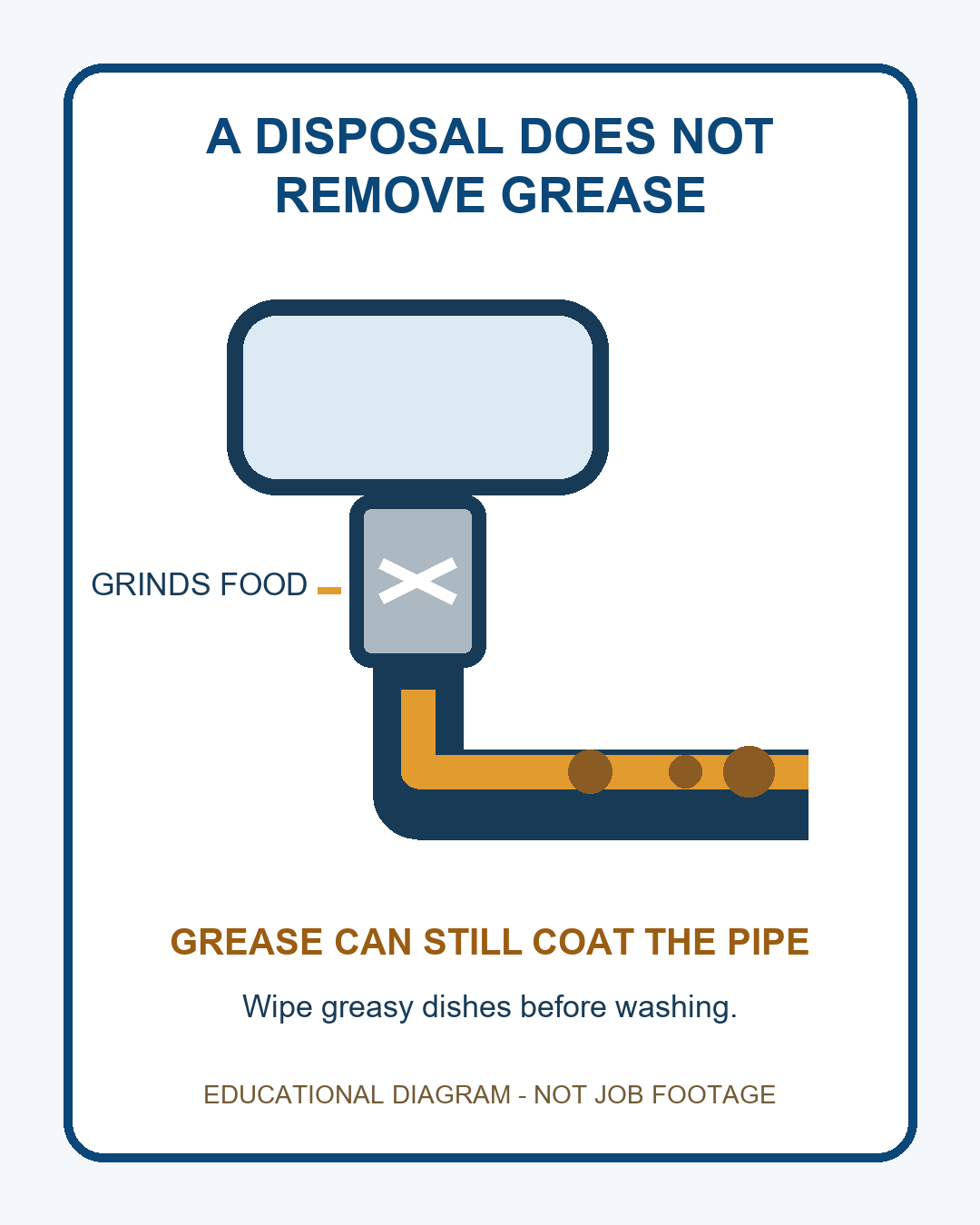
A garbage disposal motor can run normally while the sink drains slowly. The disposal grinds certain food scraps into smaller pieces, but it does not make fats, oils, or grease safe for the drainage system. City of San Diego Public Utilities specifically advises residents not to pour grease down a sink or garbage disposal because it can build up in pipes and contribute to sewer spills.
What the disposal does—and does not do
A disposal uses a rotating mechanism to break permitted food scraps into smaller particles that can move with water. It does not dissolve grease, clean the branch drain, or prove that the downstream piping is open. Motor sound only confirms that part of the appliance is moving.
Warm grease may enter the drain as a liquid and then cool on pipe walls. Food particles can collect on that coating. Over time, the available opening may narrow, and the first symptom may be slower drainage rather than a completely stopped sink.
Prevent grease from entering the drain
City of San Diego guidance says to collect fats, oils, and grease in a container for proper disposal, wipe greasy cookware before washing, and use sink strainers to catch food particles. A disposal should not be treated as a substitute for these steps.
Do not pour boiling water, solvents, caustic chemicals, or mixed drain products into a slow sink. Product combinations can create dangerous reactions and may leave hazardous liquid in the piping for anyone who later works on it. Follow the disposal manufacturer’s instructions for permitted use.
Observe the pattern before service
Note whether one bowl or both bowls drain slowly, whether water rises in the other bowl when the disposal runs, and whether a dishwasher discharge changes the level. Stop using the fixture if water backs up, a connection leaks, the appliance hums without turning, or an object may be inside.
Never place a hand in the disposal. If power must be isolated, use the manufacturer’s procedure and do not rely only on a wall switch. Tell the service provider about any cleaner already added, because that information affects safe handling.
What to share when requesting help
Report when the slow drainage began, what enters the sink during normal use, whether the disposal motor runs, and whether other nearby drains are affected. Mention standing water, leakage below the cabinet, dishwasher connection, unusual noise, or recent plumbing changes. Avoid guessing that the disposal itself is the blockage.
John Ciampoli Plumbing serves all of San Diego County. Call (619) 439-7153 or email dispatch@ciampoliplumbing.com with the ZIP code, a brief description, and the best callback contact. Ask about availability and any visit or diagnostic charges before booking.
Share this article