Preventive care · San Diego County
Why a rarely used drain can smell: understanding the P-trap water seal
Learn why a rarely used sink, shower, or floor drain can develop an odor, what a P-trap water seal does, and which observations to share before service.
By the John Ciampoli Plumbing team
· 3 min read
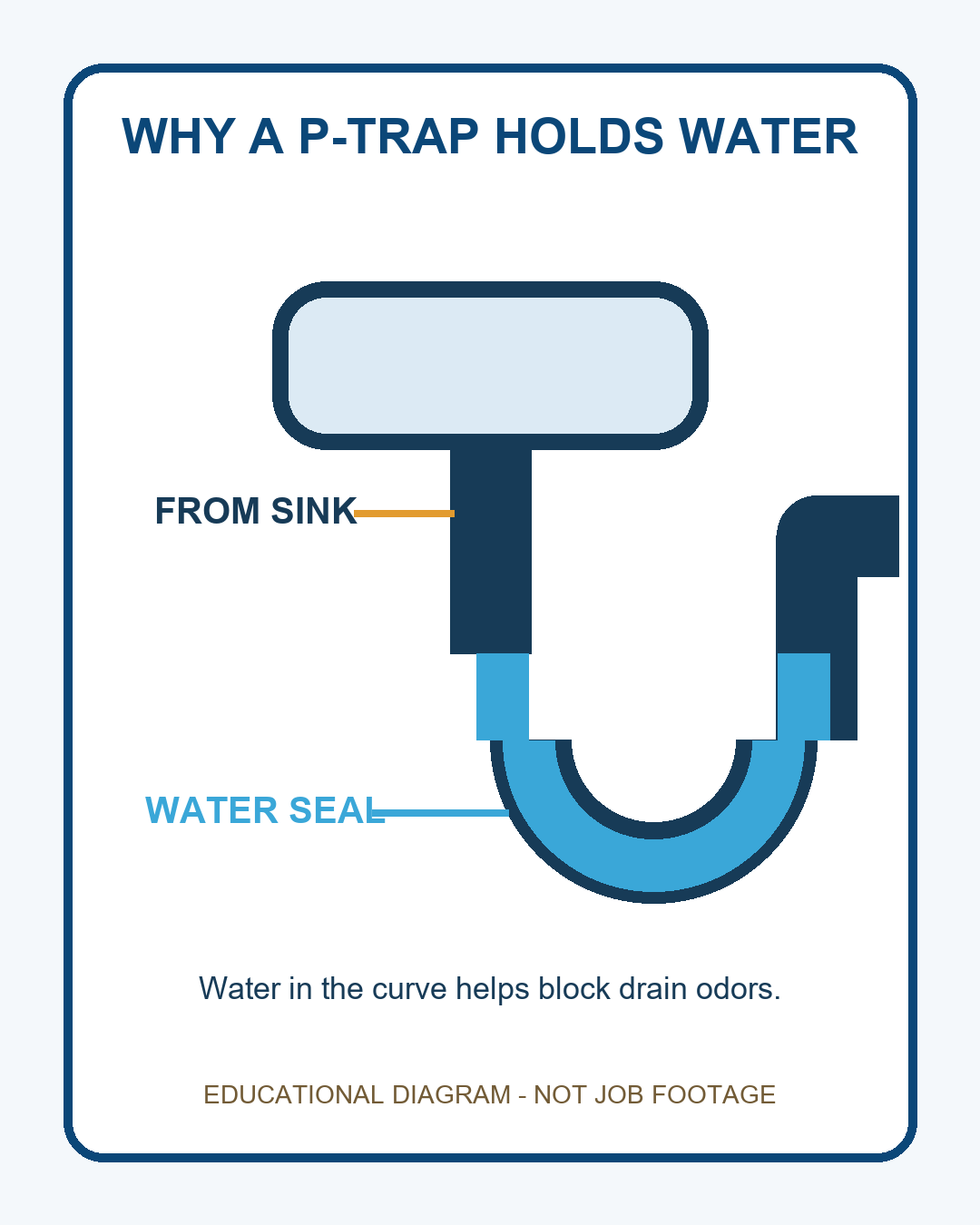
A drain that smells after sitting unused does not automatically mean the sewer line is blocked. Most fixture drains include a curved trap that is designed to retain water. That water forms a barrier between the room and the drainage system. If the fixture is rarely used, evaporation can reduce the water seal and allow odor to become noticeable. Odor can also have other causes, so the pattern matters.
What the curved trap is doing
Water leaving a sink, shower, or floor drain passes through a curved section of pipe before entering the building drain. A small amount remains in the low part of the curve after flow stops. That retained water is the trap seal, and it helps prevent sewer gas from moving backward through the fixture opening.
The trap does not filter or remove debris, and the presence of a curve does not prove the seal is intact. A loose connection, damaged trap, blocked vent, leaking seal, buildup near the drain opening, or another condition can produce a similar complaint. Treat odor as an observation rather than a diagnosis.
Start with the usage pattern
Note when the fixture was last used and whether the odor is limited to one drain or appears at several fixtures. For a normally operating, accessible fixture that has simply been idle, running water briefly may restore an evaporated trap seal. Do not add chemicals or mix cleaners in an attempt to cover the smell.
If the odor returns quickly, water appears below the fixture, the drain gurgles repeatedly, or several drains are slow at the same time, stop relying on refilling the trap as a solution. Those details may point to a different drainage, venting, or connection issue that needs inspection.
Check safely without taking piping apart
Look for visible moisture, corrosion, loose slip-joint nuts, or staining below the fixture without forcing any connection. For a floor drain, keep the surrounding area clear and note whether equipment, condensate, or another approved source normally supplies water to it. Avoid reaching into a drain or removing a trap when the contents are unknown.
In a vacant home or seasonal room, record how long the fixture sat unused and whether heating or dry weather coincided with the odor. That timeline is often more useful than guessing which part failed. If anyone feels ill or the odor is strong throughout the building, leave the affected area and seek appropriate help.
What to report when arranging service
Tell the dispatcher which fixture is affected, how often it is used, when the odor appears, whether water changes the symptom, and whether any drain is slow or backing up. Mention visible leakage, gurgling, or multiple affected fixtures. Share addresses and access details privately.
John Ciampoli Plumbing serves all of San Diego County. Call (619) 439-7153 or email dispatch@ciampoliplumbing.com with the ZIP code, a brief description, and the best callback contact. Ask about availability and any visit or diagnostic charges before booking.
Share this article