Preventive care · San Diego County
Dry floor, running toilet? A simple dye check can reveal a tank-to-bowl leak
Learn how a standard tank toilet can leak into the bowl without wetting the floor, how to perform EPA WaterSense’s food-coloring check, and what to report when arranging service.
By the John Ciampoli Plumbing team
· 3 min read
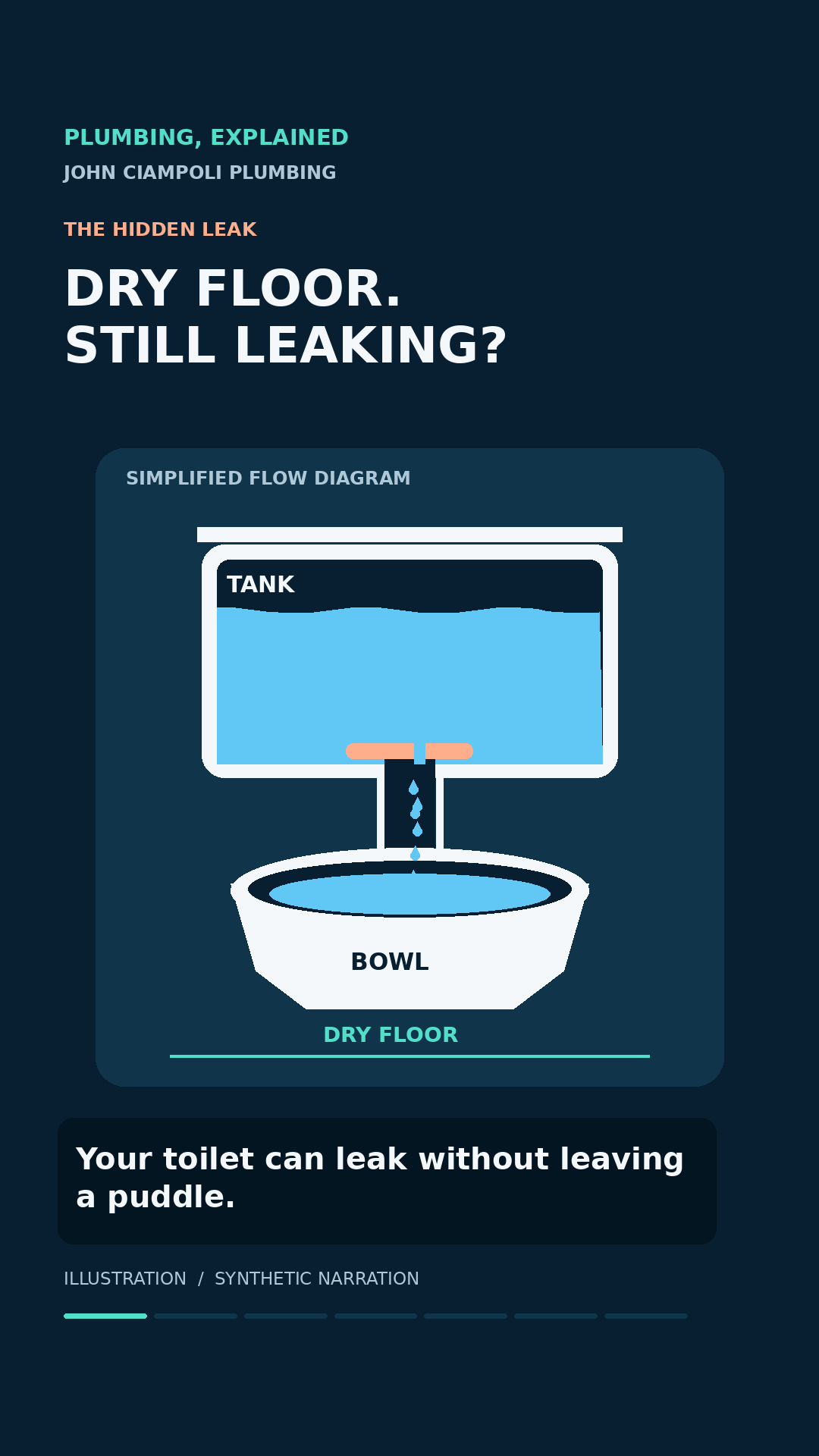
A toilet can waste water without leaving a puddle on the bathroom floor. On a standard tank toilet, water may slip past the seal between the tank and bowl, quietly entering the bowl between flushes. EPA WaterSense recommends a simple food-coloring check that can help confirm whether this type of leak is present. The check identifies a symptom; it does not determine which part should be repaired or whether another problem is also present.
How a toilet can leak while the floor stays dry
In a standard gravity-fed toilet, the tank stores water for the next flush. A seal at the tank outlet is intended to hold that water until the flush mechanism is activated. If water passes that seal between flushes, it can enter the bowl and continue through the toilet without appearing on the surrounding floor.
A refill valve may cycle periodically as the tank level drops, but sound alone does not prove which component is responsible. Condensation, a supply connection, tank hardware, a wax seal, or another source can create different symptoms. Note whether the floor is wet, whether the tank refills by itself, and whether water movement is visible in the bowl.
Use the food-coloring check safely
EPA WaterSense advises placing a few drops of food coloring in the toilet tank, waiting 10 minutes without flushing, and then checking the bowl. If color appears in the bowl, water is moving from the tank into the bowl. Keep cleaners and chemicals out of the test, and do not mix products in the tank.
Flush immediately after completing the check to help avoid staining. If the toilet is overflowing, loose, cracked, actively leaking onto the floor, or affecting the area below, stop using it and contact a plumbing professional instead of relying on this check.
Record observations instead of guessing at parts
Write down whether color appeared, whether the toilet refilled during the waiting period, and whether any water was present around the base, supply line, shutoff valve, or tank bolts. A short video of visible tank or bowl activity can be useful, but send addresses, access details, and personal contact information privately.
Different toilets use different components, sizes, and operating systems. A positive dye check does not establish that a universal part will fit, and a negative result does not rule out every possible toilet or bathroom leak. Avoid forcing a shutoff valve or disassembling the fixture solely to identify a part.
What to share when requesting toilet service
Tell the dispatcher the toilet style if known, what you observed during the 10-minute check, whether the floor or room below is wet, and whether the fixture can be left unused. Include the manufacturer or model information only when it is safely visible. Mention building access or water-shutdown requirements before the visit.
John Ciampoli Plumbing serves all of San Diego County. Call (619) 439-7153 or email dispatch@ciampoliplumbing.com with the ZIP code, a brief description, and the best callback contact. Ask about availability and any visit or diagnostic charges before booking.
Share this article