Preventive care · San Diego
Putting a stacked washer back? Plan the plumbing and the final position.
A real San Diego laundry reconnection shows why supply lines, the discharge hose, access, and closet-door clearance belong in the service plan.
By the John Ciampoli Plumbing team
· 4 min read
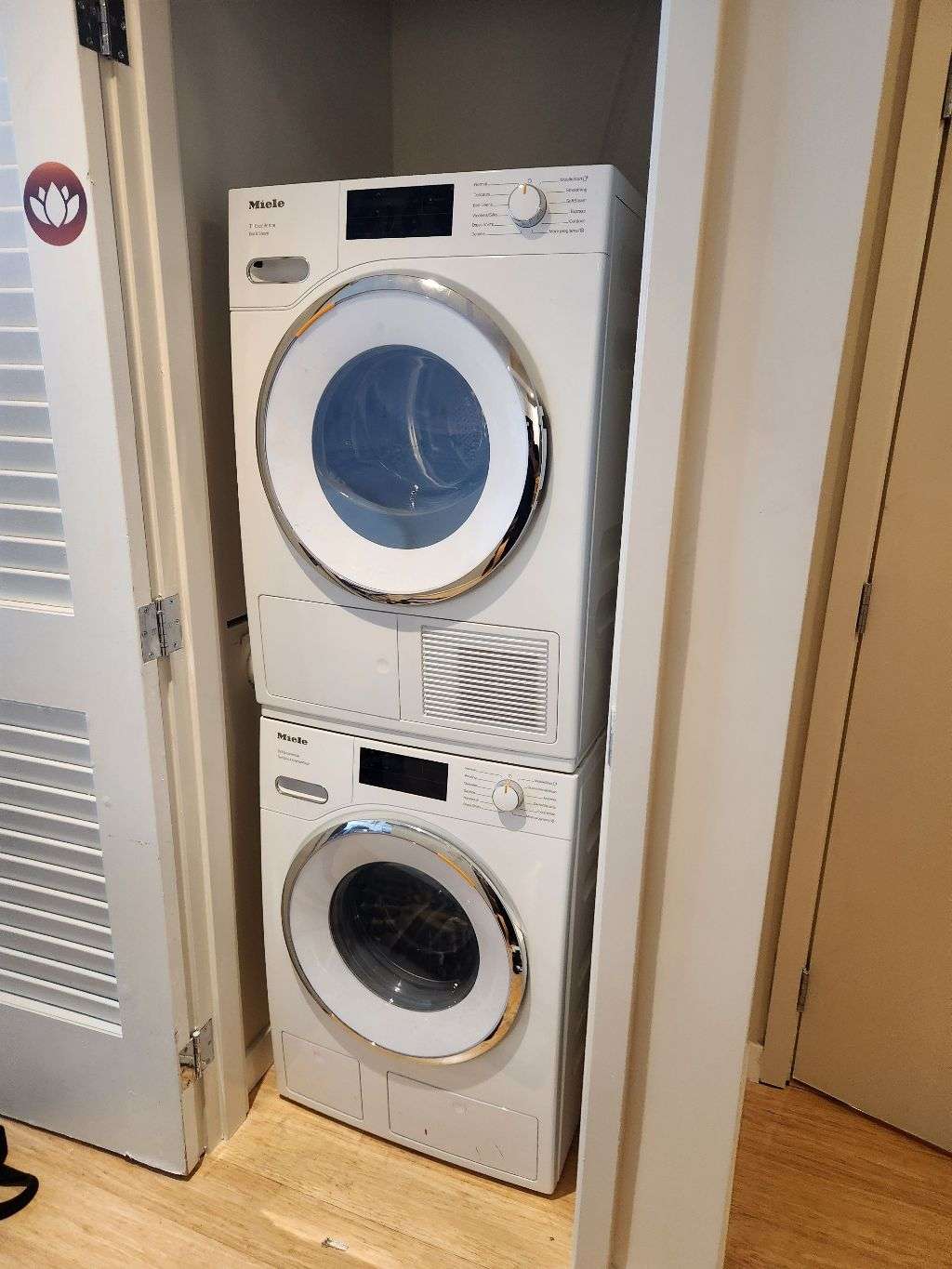
A stacked laundry unit returning to a closet involves more than getting the appliances through the doorway. The water supply and discharge hose need attention, and the completed setup still has to fit the space. A September 2026 job in San Diego offers a practical example of planning the connections, checking the work, and confirming the final position without confusing a reconnection with an appliance repair.
What happened on this San Diego job
Our technicians returned to reinstall an existing stacked washer and dryer. Their notes record reconnecting the water supply lines and discharge hose, restoring water, and checking for leaks. They then used moving equipment to place the stack back in its closet and checked that the closet door could close.
The work was completed and the area cleaned. The documented scope was reconnection and positioning of the existing laundry unit. The report does not describe replacing the appliances, repairing their internal components, or completing a full laundry cycle, so we do not claim those additional services.
Explain why the laundry unit is out of position
When arranging service, explain whether the unit was moved for another repair, is being returned after work in the closet, or is part of an appliance replacement. Include whether it is already stacked and where it is currently located. That context helps the dispatcher understand what the visit needs to address.
Send the make and model information if available, along with photos of the closet opening and visible connections. Use the actual equipment instructions for a discussion of installation requirements. Another home's photograph cannot establish the clearances or connection arrangement for your appliances.
Make access part of the plan
A finished laundry closet can conceal much of the plumbing. Before the visit, describe any shelving, narrow doorway, stairs, or building access arrangements that may affect reaching the equipment. Keep the approach clear of stored items where you can do so safely.
Ask who will handle moving the stack and who will reconnect each part of the setup. Do not try to pull out or tip a stacked unit to take a better picture. If a connection is not safely visible, describe what you know and let the service team assess access during the visit.
Discuss both the water supply and the discharge hose
On this job, the notes identify both supply-line reconnection and discharge-hose reconnection. They are separate parts of the work. Ask whether the proposed service includes reviewing the existing connections, checking their condition, and explaining any replacement that may be needed.
Mention an earlier drip, a wet area, or an unusual drainage symptom before work begins. Report what you observed rather than guessing which part failed. Reconnecting an appliance and diagnosing a problem inside the appliance are different scopes, and the service discussion should make that distinction clear.
Check the final position and agree on the handoff
In the San Diego example, the team checked closet-door closure after moving the stack back. A unit being inside the closet does not by itself tell you whether the surrounding space works as intended. Ask the installer to review the final position and explain how future access will be handled.
Before regular use resumes, ask what operation and leak checks were completed and whether anything still needs attention. If you later see water or notice a new problem, stop using the affected washer and contact the service provider. Share when the symptom occurs and a photo taken from a safe, accessible position.
Arrange a laundry plumbing visit
John Ciampoli Plumbing serves all of San Diego County. Send the dispatcher your ZIP code, a brief description of the project, the appliance model information you have, and any building rules that affect access or water service.
Call (619) 439-7153 or email dispatch@ciampoliplumbing.com to discuss the work and current availability. Keep property addresses, access codes, and personal details out of public comments.
Share this article