Bathrooms · Carlsbad
Replacing a tub/shower valve in a shared building? Plan the shutdown first.
A completed Carlsbad valve replacement shows why product information, building access, a coordinated water shutdown, and final testing belong in the plan.
By the John Ciampoli Plumbing team
· 4 min read
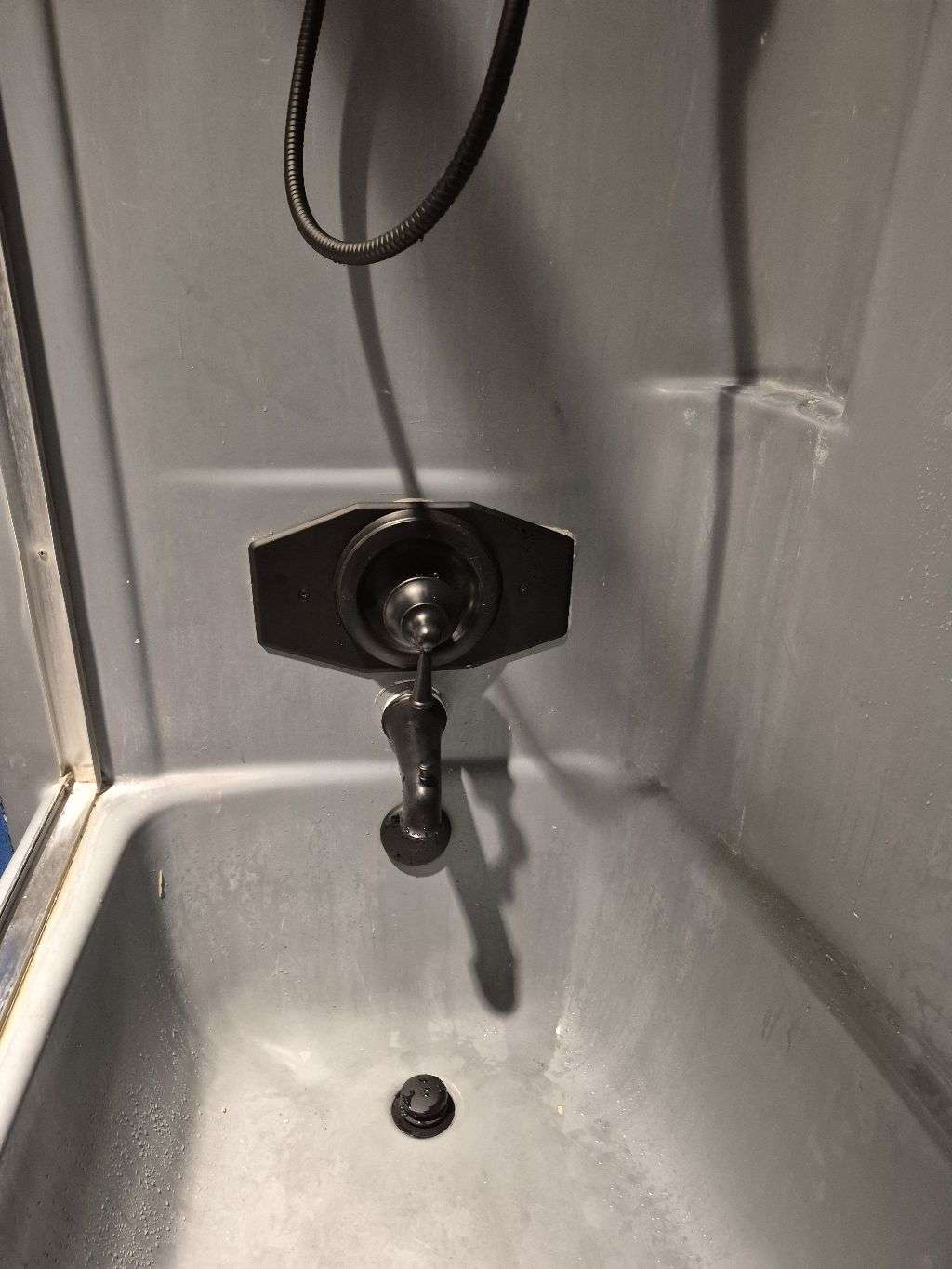
A tub/shower valve can be hidden behind a relatively small control, but replacing it may affect more than that visible trim. The installer needs to understand the selected product, reach the piping, coordinate any necessary water shutdown, and test the finished installation after service is restored. In a condominium or apartment building, those steps can involve management or engineering as well as the resident and plumber.
What our team completed in Carlsbad
During a September 2026 visit, our technicians replaced a tub/shower valve in a Carlsbad building. The customer supplied the new matte-black valve and trim. Building water was shut down and drained so the old valve could be removed and the new valve connected to the existing piping.
After installation, water service was restored. The technicians checked the completed work for leaks, tested the valve’s operation, and cleaned the work area. The photograph shows the finished plumbing fixture only; the existing tub, enclosure, walls, and accessories were not replaced by our team.
Identify the exact product before scheduling
If you are supplying the valve or trim, send the dispatcher the manufacturer, model number, product link, and installation instructions before the visit. A finish color or a photo of the handle does not identify the rough valve, connection arrangement, or every component included in the box.
Keep the packaging and parts together until the installer reviews them. Ask whether the chosen trim and valve are intended to work together and whether another component may be needed. Product review can improve planning, but the existing piping and access still have to be assessed at the property.
Coordinate the water shutdown as part of the job
In a shared building, a fixture may not have an independent shutoff that isolates all of the required work. Management or building engineering may need to approve a shutdown, notify occupants, provide mechanical-room access, and restore service. Tell the dispatcher about those procedures when arranging the visit.
Confirm the authorized shutdown window and who will operate the building valves. Do not assume the plumber can turn off a shared supply without coordination. If access or approval is uncertain, resolve it before technicians and materials arrive so the scope can be discussed clearly.
Access behind the control matters
Valve replacement requires access to the body and piping behind the visible handle and trim. The available opening, the condition of the surrounding surface, and access from the opposite side of the wall can affect how the work is approached. Share photos of the entire fixture wall and any accessible wall on the other side.
Ask what opening or finish work is expected and who will handle it. A plumbing replacement and restoration of tile, wallboard, paint, or an enclosure are separate scopes unless the proposal specifically combines them. Agreeing on that boundary before work begins helps prevent confusion at the handoff.
Check the completed installation after water returns
The handoff should include restoring water, operating the control, checking hot and cold response, and looking for leaks at the accessible work area. Ask the installer to explain what was tested and whether any separate finish work remains.
If you notice moisture, a change in control operation, or another concern after the visit, stop using the affected fixture when practical and contact the service provider. Report when the symptom appears and send a clear photo from a safe location rather than opening the wall or adjusting unfamiliar components yourself.
Plan bathroom plumbing anywhere in San Diego County
John Ciampoli Plumbing serves homes, multifamily properties, and businesses throughout San Diego County. When contacting our dispatcher, include the property ZIP code, fixture location, product information, building contact, and any shutdown or access rules.
Call (619) 439-7153 or email dispatch@ciampoliplumbing.com to discuss the work and current availability. Send unit numbers, property addresses, access codes, and personal contact details privately rather than posting them in public comments.
Share this article