Preventive care · San Diego County
Wet pipe: condensation or a plumbing leak? Observe before guessing
Learn how condensation can wet a cold pipe, which patterns suggest a localized leak, and what to document before requesting plumbing service.
By the John Ciampoli Plumbing team
· 3 min read
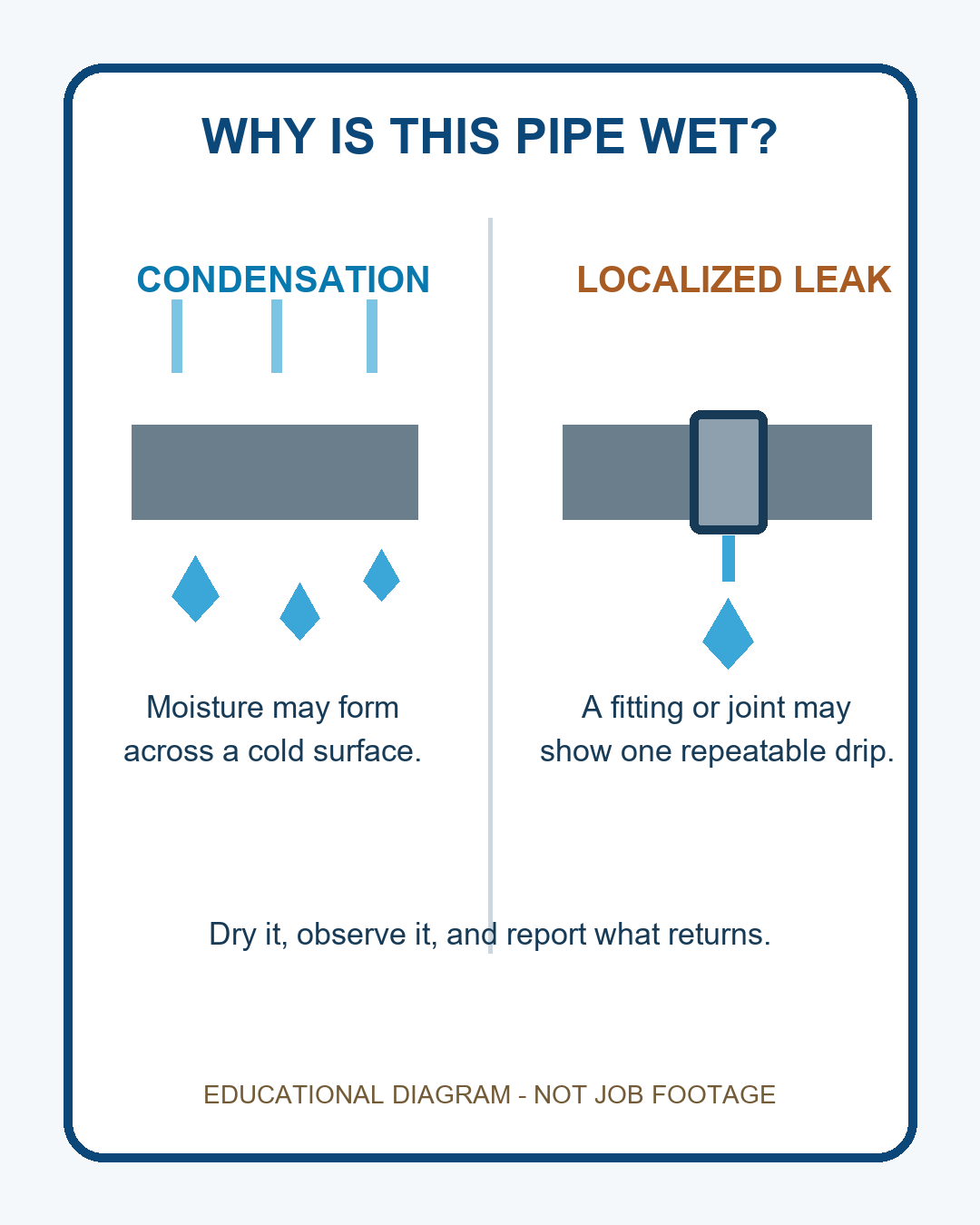
Water on a pipe is evidence of moisture, but it does not identify the source by itself. Humid air can condense on a cold water line, while a loose joint, damaged fitting, valve, or nearby source can create a localized leak. EPA moisture-control guidance emphasizes finding and correcting water sources because persistent moisture can damage materials and support unwanted biological growth.
Why a cold pipe can become wet
When humid air contacts a surface below the air’s dew point, water vapor can condense into droplets. A cold-water pipe may therefore look uniformly damp during humid weather or while water is flowing. Similar condensation can appear on a toilet tank, supply line, or air-conditioning component.
Condensation is not harmless if it repeatedly wets insulation, cabinets, drywall, or flooring. EPA guidance recommends controlling indoor moisture and fixing leaks or seepage promptly. The useful question is not simply whether the pipe is wet, but where moisture begins, when it appears, and what materials it reaches.
Patterns that deserve closer attention
A leak often produces a repeatable wet point at a fitting, valve, joint, or damaged section, although water can travel along the pipe before dripping elsewhere. Staining, mineral deposits, corrosion, swelling, or a growing wet area may indicate that moisture has been present longer than the visible drip suggests.
Dry the accessible surface once, then observe without disturbing connections. Note whether moisture returns only when a fixture runs, only during humid conditions, or continuously. Do not tighten a corroded fitting, force a valve, remove insulation, or open a wall solely to test a guess.
Protect the area without hiding evidence
Move stored items away from the wet area and use a container only if it can be placed safely without contacting electrical equipment. Photograph the pattern and check the room below when accessible. If water is near electricity, a ceiling is bulging, or the flow is active and cannot be controlled safely, leave the area and seek urgent help.
Ventilation or a dehumidifier may reduce ambient moisture, but it does not repair a plumbing leak. Likewise, wrapping a wet joint can redirect water and conceal the source. Preserve clear access for inspection and report any temporary steps already taken.
What to report when arranging service
Tell the dispatcher the pipe or fixture location, when moisture appears, whether the surface was uniformly damp or had one drip point, and whether nearby water use changes it. Mention damaged materials, electrical proximity, water below the room, shutoff access, and any previous repair.
John Ciampoli Plumbing serves all of San Diego County. Call (619) 439-7153 or email dispatch@ciampoliplumbing.com with the ZIP code, a brief description, and the best callback contact. Ask about availability and any visit or diagnostic charges before booking.
Share this article