Leaks & repairs · San Diego County
Plumbing leak inspection: what to prepare before the visit
A useful leak visit starts with clear observations and access. Bring these details, then ask what the inspection confirmed and what the repair will require.
By the John Ciampoli Plumbing team
· 5 min read
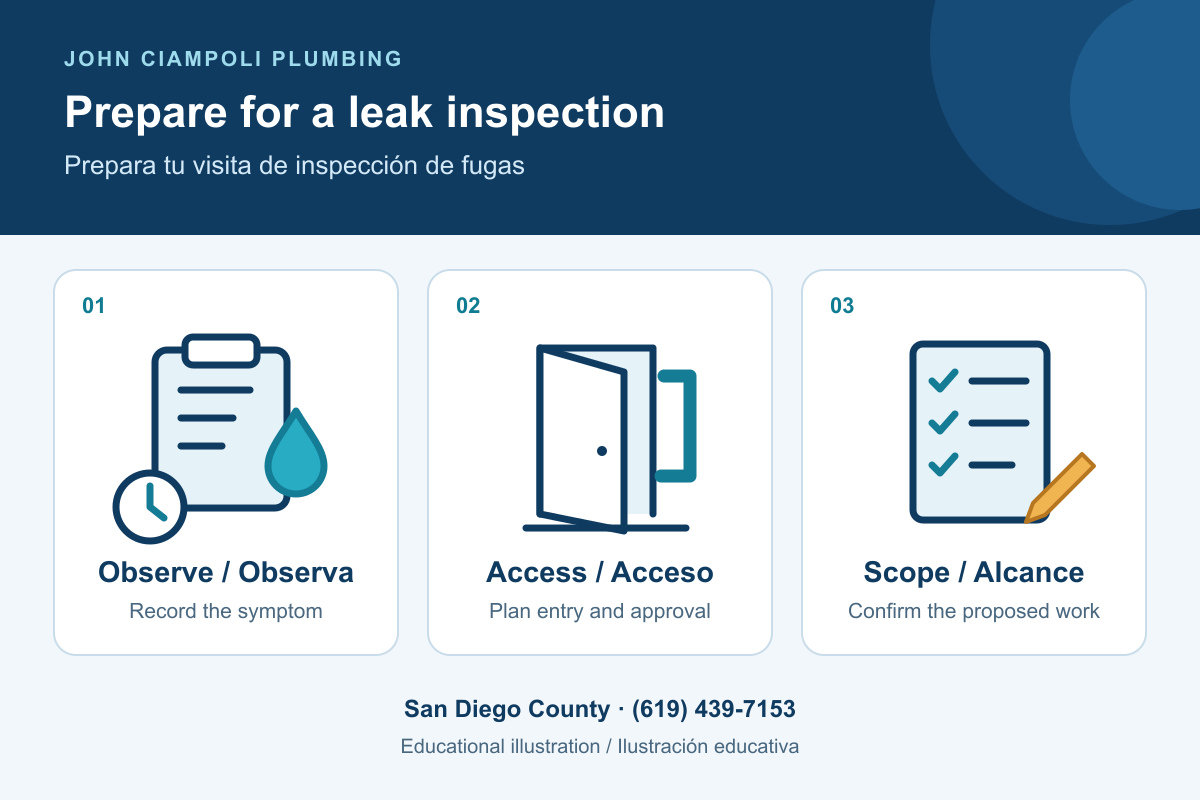
A damp cabinet, a stain on the ceiling and a utility leak alert are different starting points. When booking a plumbing leak inspection in San Diego County, describe what you can actually observe. You do not need to identify a failed pipe before calling. The purpose of the visit is to investigate the reported condition, explain what is confirmed and establish the next step. Locating a leak, reaching it and repairing it may involve separate work.
1. Start with the symptom and its timing
Write down the first time you noticed the problem and the most recent occurrence. Does water appear continuously, after a particular fixture runs, or only occasionally? Is one area affected or more than one? Describe the observation without turning it into a diagnosis: “water appears under the kitchen sink during use” gives the technician more useful information than an unconfirmed label such as “slab leak.”
Take a clear photo from a safe, dry position if possible. Include the surrounding fixture as well as the wet area, and keep earlier photos when the symptom changes. Do not keep running water to reproduce damage, remove finishes or enter a crawlspace just to gather evidence. Report active water loss when you call.
- Affected fixture or room and when the symptom occurs.
- Whether water is still escaping or has already been isolated.
- Recent plumbing work, previous repair reports and any return of the same symptom.
2. Bring water-use information without assuming it proves the cause
If the concern began with a utility alert or an unusual bill, keep the dates and readings available. EPA WaterSense recommends reviewing bills and checking meter readings during a period without water use as ways to look for possible leaks. That information gives the inspection a starting point; it does not identify the failed connection.
Tell the technician about irrigation, automatic equipment or other water use during the observation. A meter check also does not settle a drain leak that occurs while a fixture empties. Share what you already observed rather than delaying help for an active leak while you conduct another test.
Understand what a no-use water-meter check can and cannot show
3. Arrange access before the appointment
Tell dispatch whether the property is a house, condo, business or managed building. Identify occupied units, locked rooms or other areas that may affect access to the reported plumbing. If it is safe, clear ordinary stored items from around the fixture; leave heavy appliances, electrical equipment and building finishes in place.
For shared plumbing, identify the person who can approve access and coordinate any water shutdown. A tenant reporting a symptom may not be the person authorized to approve work. Send exact addresses, unit numbers and entry instructions privately to dispatch, and confirm who will be available to discuss findings.
4. Ask where inspection ends and repair begins
Before authorizing work, ask what the visit includes. An inspection may establish a source, narrow the investigation or identify an area that cannot yet be reached. Ask the technician to distinguish an observed leak from a suspected cause and to explain any additional access or testing proposed.
Our published Santee service example shows the distinction. A separate detection company located an in-wall leak; our technician confirmed the affected connection on August 6, 2026. On the August 7 return visit, our crew enlarged the existing opening, replaced the leaking copper-pipe section and connections, restored water and checked for leaks. The plumbing repair was completed; the record does not document finished drywall restoration.
Read the documented Santee investigation and return repair
- Does the proposal cover investigation only, or access and plumbing repair too?
- What water shutdown, parts or return visit may be needed?
- Who handles drying, drywall, tile, stucco or painting when those are outside the plumbing scope?
- Which charges and exclusions apply before additional work is approved?
5. Leave with findings and a clear follow-up
Ask what was observed, what was tested and what remains unresolved. If the reported leak did not occur during the visit, that is a finding to record—not proof that the earlier symptom never happened. Keep the report and ask what details would help if the moisture returns.
For an authorized repair, ask which operating and leak checks were completed and whether separate work remains. A useful handoff identifies the repaired component and any follow-up, rather than describing every stage as simply “leak fixed.”
Request a leak inspection in San Diego County
John Ciampoli Plumbing serves homes, businesses and managed properties throughout San Diego County from our Spring Valley office. Call (619) 439-7153 or email dispatch@ciampoliplumbing.com with your city, the affected area and whether water is currently escaping. Dispatch confirms availability, visit charges and next steps.
If water is near electrical equipment or there is an immediate safety hazard, keep away and use the appropriate emergency services. For an active plumbing leak, stop using the affected fixture and tell dispatch it is urgent. Do not force a stuck shutoff or take risks trying to complete this checklist.
Share this article