Drains · San Diego
Yard Drain Still Pooling After Rain? Prepare a Useful Service Request
Record where water collects, how long it remains and which private drain is involved. Plan a San Diego drainage visit and confirm maintenance responsibility.
By the John Ciampoli Plumbing team
· 3 min read
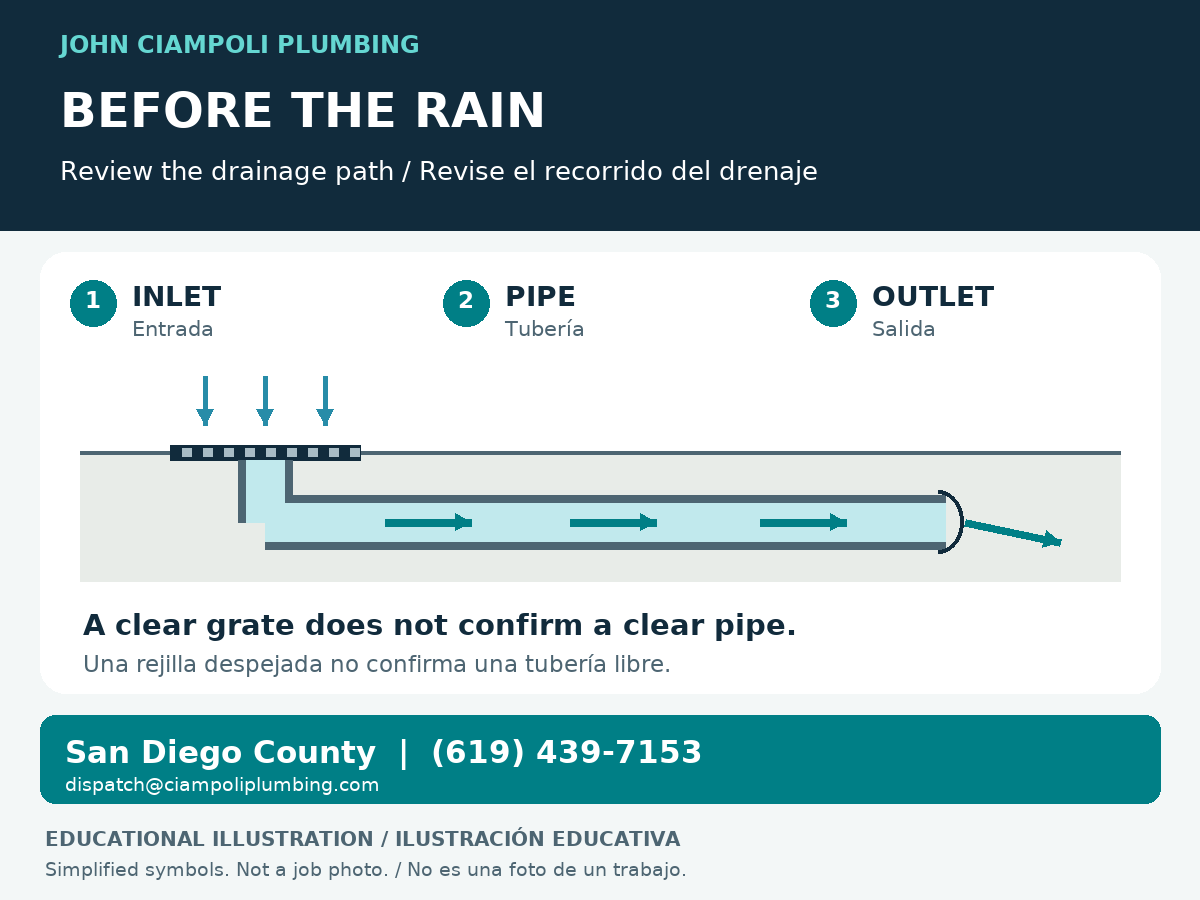
A clear-looking grate does not describe the entire drainage path. If water repeatedly collects near a yard or courtyard drain, record the pattern when it is safe and arrange an assessment of the relevant private drainage. Start with observations rather than a guessed pipe diagnosis.
Capture the pattern after conditions are safe
From a safe location, note where water collects and where it appears to approach the drain. Photos taken at different times can show whether pooling recedes quickly or remains after the rain stops. Record the date and the location rather than relying on memory at the next visit.
Do not enter flowing or standing floodwater, lift heavy grates or enter a pit. Keep clear of electrical equipment near water. If a condition threatens immediate safety, contact emergency services or the responsible public agency.
Confirm who maintains the feature
The County of San Diego explains that drainage can be maintained by a public agency, a resident or an HOA. Appearance and location alone may not settle responsibility. Use property records and the responsible agency's guidance when the boundary is unclear.
For an HOA, identify the manager who can arrange inspection and authorize work. If the concern involves a public street inlet, report it to the relevant public agency rather than arranging private work on public infrastructure.
Describe the path and past service
Tell dispatch which inlet is involved, whether more than one area pools and whether any drainage pump serves the area. Share known access points, old reports and the location of a known outlet. Mark unknown details as unknown; the technician can explain what the assessment can establish.
A surface cleanup, pipe clearing, pump service and a drainage-design assessment address different questions. Ask which scope is proposed and what findings would call for another trade or a broader review.
- Location and approximate duration of pooling.
- Photos taken safely before the area dries.
- Known private inlets, outlets and equipment.
- Previous cleaning dates and results.
- Access arrangements and the authorized contact.
Use maintenance findings to plan follow-up
Ask what was inspected or cleared and how drainage was checked. Keep unresolved findings with the report so recurring pooling is assessed against the earlier work. Maintenance may reduce blockage risks but cannot guarantee that a property will not flood.
John Ciampoli Plumbing serves San Diego County. Call (619) 439-7153 or email dispatch@ciampoliplumbing.com to discuss assessment of private drainage and service availability.
Share this article